Top plate joints and why they are staggered
Plate joints bunched together and double walls left unjoined on a Pakenham frame.




In short: The top of a wall frame is a chain of plates. Where the joints in that chain line up or sit too close, the wall has a weak spot.
How a top plate works
Top plates tie the studs together and spread the roof load along the wall. Where one length ends and another begins there is a joint, and AS 1684 sets how far apart those joints must be and how they are fixed.
What we found
On a Pakenham frame several top and ribbon plate joints sat close together, some over a single stud without the nail plate or blocking needed. Elsewhere double walls had not been joined, which tends to show up later as cracking at the plaster junction.
Laminated jamb studs
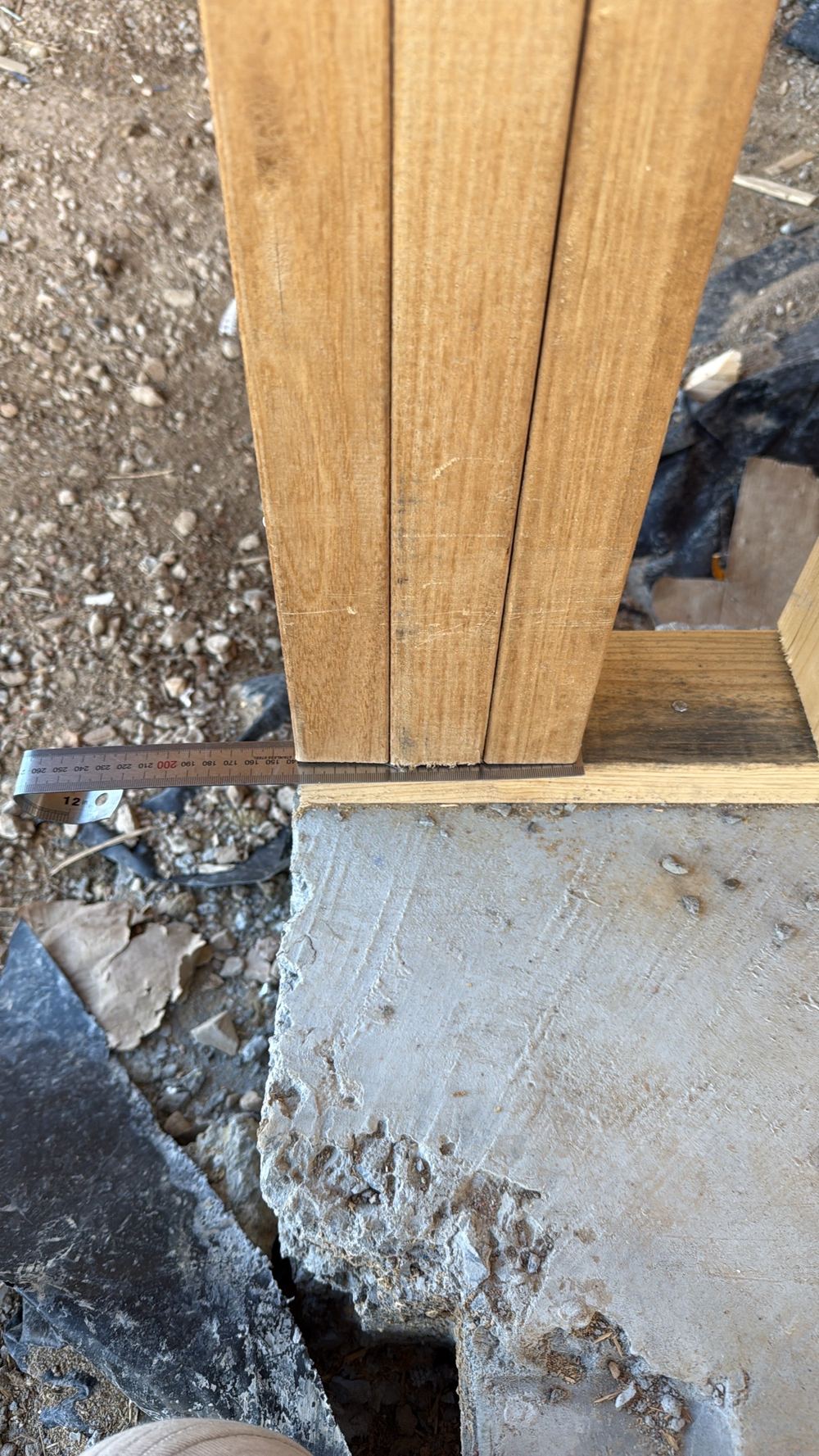
On the same inspection jamb studs beside an opening had visible gaps between them. Multiple studs only act as one member when they are nailed tight together.
Fixing it
Each of these is a short job with a nail gun and some blocking while the frame is open. Left alone, they become cracks and sticking doors.
What to book
A frame inspection with your plans in hand. It is the only point at which all of this can be seen.
Written by our local inspection team from work carried out in Pakenham. Licensed building practitioners, Building & Plumbing Commission registration CDB-U 53425.